

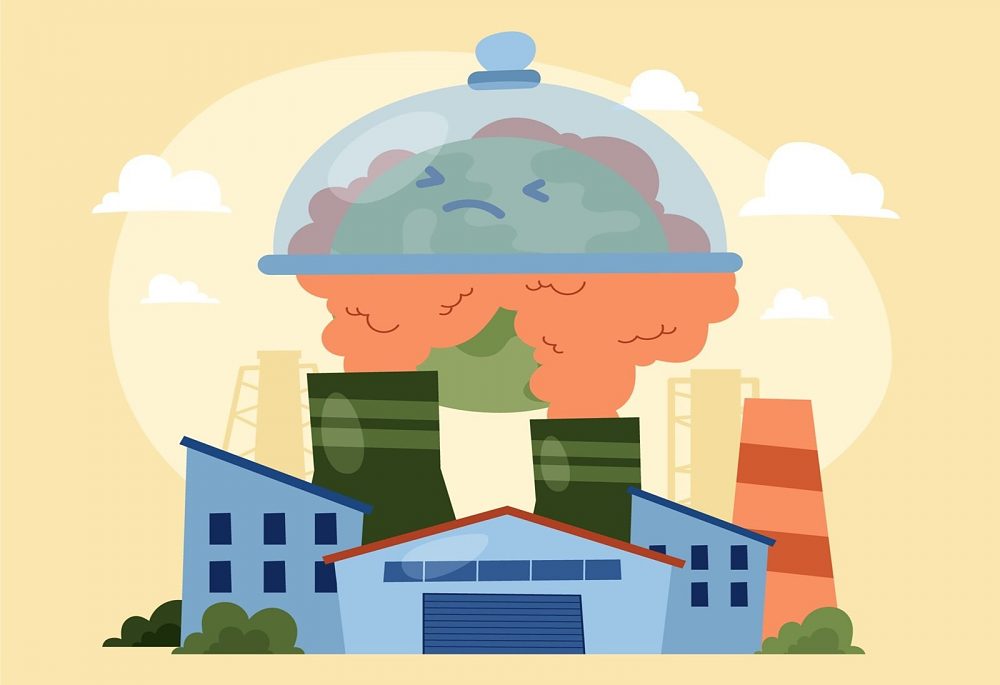
Air pollution and climate change are closely interconnected phenomena with significant environmental and health impacts. Emissions—gases and particulate matter released primarily from energy production, transport, and residential heating—affect processes ranging from global warming to the development of respiratory and cardiovascular diseases.
From an impact perspective, two main categories can be distinguished. Greenhouse gases, such as carbon dioxide (CO₂) and methane (CH₄), intensify the greenhouse effect and drive climate change. Their increased concentrations lead to rising global temperatures, more frequent extreme weather events, and disruption of ecosystems. The second category consists of air pollutants, including fine particulate matter (PM₂.₅), nitrogen dioxide (NO₂), and sulfur dioxide (SO₂), which have direct adverse effects on human health and quality of life. In addition, these substances also damage the surrounding environment—they cause corrosion, degradation of buildings, and damage to roads and other critical infrastructure.
Since 1990, Slovakia has achieved a significant reduction in emissions, particularly in the energy and industrial sectors. A major milestone was the phase-out of coal-fired electricity generation in 2023–2024, which resulted in lower CO₂ emissions as well as a reduction in harmful air pollutants. This transition has contributed to improved air quality and a gradual decrease in health risks.
However, the transport sector remains a persistent challenge, with emissions continuing to rise. Increased reliance on individual car transport leads to higher concentrations of pollutants, especially in urban areas. Residential heating, particularly the burning of solid fuels in outdated systems, is also a significant source of pollution.
Slovakia’s energy transition is moving toward a low-emission mix based on nuclear energy and renewable sources, complemented by transitional solutions such as natural gas and energy storage. Each of these options has its own environmental and technological limitations, but their combination is essential for ensuring a stable and sustainable energy system.