

BTR: What Is It?
A BTR is a document in which countries report on how they are meeting their climate change commitments under the Paris Agreement. It contains an inventory of greenhouse gas emissions and removals, information on progress towards the nationally determined contribution (NDC) – in Cyprus's case, the joint EU contribution – an overview of policies and measures, and emission projections. Oversight of this information is provided by the enhanced transparency framework under Article 13 of the Paris Agreement. Every Party is required to submit a Biennial Transparency Report on a regular basis.
The submitted report then undergoes a technical expert review (TER), carried out by independent UNFCCC experts. For each report and country, a team of experts is assembled according to area of expertise, such as a particular sector of the inventory, policies and measures, or projections. Under the Paris Agreement, the review is facilitative in nature and respects national sovereignty. Its purpose is not to find fault or assign blame, but to foster expert discussion aimed at improving the quality and comparability of BTRs.
Reviewing a BTR
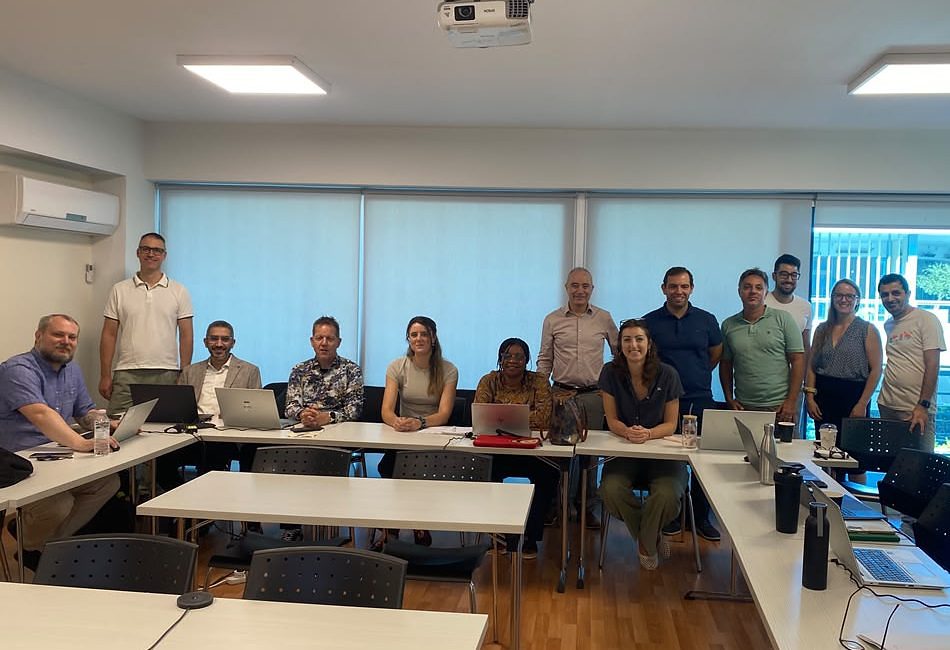
Under the rules adopted in Decision 18/CMA.1, the first BTR is assessed in the country under review. Many uncertainties can be resolved more quickly through direct discussion than through a written exchange of questions. Reviewers can ask the authors of the report directly how they worked, which models and data they used, and how the whole process is organised. Direct contact also encourages open communication between reviewers and national experts, which is important to the process.
How an In-Country Review Unfolds
On Monday, the Cypriot experts presented their methods and results. On Tuesday and Wednesday, bilateral discussions were held with the experts who had contributed to the report, and any points of uncertainty were clarified. On Thursday, the draft technical expert review report (TERR) was prepared, the wording of the findings was refined, and final discussions took place. On Friday, preliminary results of the review were presented at a joint wrap-up session. A representative of the UNFCCC Secretariat oversaw the impartiality of the process.
The specific findings are not yet public. Cyprus has six weeks to comment, and the final report should be published in January 2027.
During the review, Ján Horváth learned how Cyprus has approached its energy transition. Following a rise in fossil fuel prices, the country decided in 2018 to develop renewable energy sources more vigorously. Fossil fuel prices were climbing steeply at the time, and Cyprus feared they would continue to do so. Rather than providing blanket support to keep fossil fuels in the system, it therefore chose to give greater backing to renewables.
Today, Cyprus makes greater use of solar and wind energy, supplemented by energy storage. To stabilise the grid, gas-fired power stations are also being built alongside them, as an island system with limited interconnection to neighbouring grids requires such capacity.
The afforestation programme "I Plant for Climate", which Cyprus highlights in its report was also interesting. The programme is intended to help increase removals in the land use, land-use change and forestry (LULUCF) sector. By 2030, Cyprus plans to plant and maintain one million trees.
At the same time, Cyprus is seeking to reduce landfilling significantly. It relies on separate waste collection, extended producer responsibility for products placed on the market, and landfill bans and charges. These measures form part of the country's effort to move gradually towards a circular economy.
The BTR review showed that, when working with data from such documents, it is important to understand the context in which they are produced. This context is best grasped through direct discussion with the experts who prepare the underlying material. The experience was interesting from the perspective of energy, waste management and forestry, and demonstrates how varied the solutions are that countries can adopt in pursuit of similar climate goals. It is also useful for reflecting on our own work, as it allows us to compare approaches and identify areas where we can draw inspiration from the experience of other countries.
For our department, BTR review is also an opportunity to collaborate and exchange experience with experts from other countries. Such professional cooperation is likewise an important part of the transparency framework under the Paris Agreement.